

Autumn Budget 2025 – Reaction
 Reaction
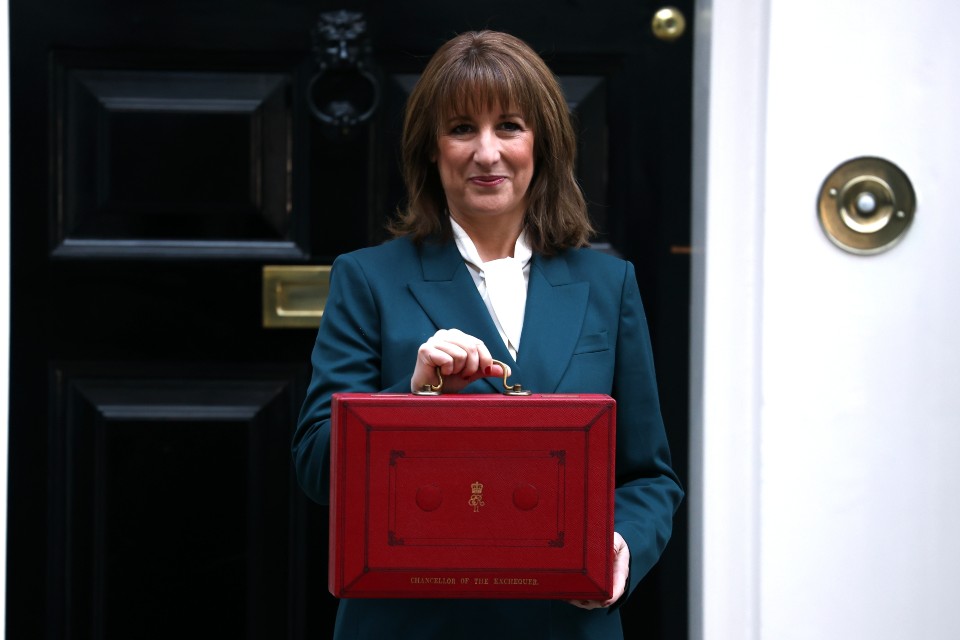
Chancellor Rachel Reeves’ second Autumn Statement was no less anticipated than her first. In that Statement, the Chancellor firmly nailed her political career to the mast of economic growth. This growth has not yet materialised. The economy continues to splutter, and whilst we are only one year into a long-term project, the way in which business was targeted last year for National Insurance hikes seemed incongruous with a committed growth agenda. With the minimum wage increasing and the Employment Rights Bill working its way through Parliament, businesses will find Rachel Reeves an easy target to blame for a weakening labour market. They will point to a lack of genuine commitment to economic growth, which has held back businesses and investment.
After months of speculation, which neither she nor the Prime Minister did much to quell, it was a relief to see the detail finally. That detail came early with a moment of farce. The Office for Budget Responsibility (OBR) accidentally leaked its growth forecast an hour ahead of the Chancellor’s speech. That forecast is an analysis of the impact of the announced budget, so it provided many of the details in advance. Television viewers were treated to the surreal spectacle of a Keir Starmer and Kemi Badenoch undercard fight ahead of a budget that had been accidentally leaked but hadn’t been formally announced. The good news for Reeves was that the expected OBR downgrade was far smaller than anticipated, giving her a little more room to manoeuvre.
The Chancellor has been under enormous pressure this year. In addition to some significant economic headwinds, she has faced a war on multiple fronts. Before the election, she took away many of her own options. By insisting that she will adhere to a stringent set of fiscal rules, she limited her ability to spend or borrow. By promising in the Labour Party Manifesto not to increase income tax, National Insurance, or VAT, she limited her ability to raise significant tax revenues. Even her own backbench MPs thwarted attempts earlier this year to balance the books when she sought to reduce benefits.
The media have reduced her choices down to two simple options. Break the manifesto and face a political backlash, or strangle economic growth through what has been referred to as a “smorgasbord” of stealth taxes on individuals, businesses and investors, just to save face with the electorate.
Reeves and Starmer have now picked their poison, and politics appears to be the winner.
Personal tax thresholds will be frozen until the end of the 2030-31 tax year. Fiscal drag was big news in the last Autumn Budget, and extending this for another three years will be seen as a failure for Rachel Reeves. Last year, she planned to increase the personal allowance in line with inflation from 2028. She acknowledged this in her speech. Whilst income tax rates remain the same, a freeze in personal tax allowances means that people earning an income will pay more tax over that time, to the tune of a collective £8bn as forecast by the OBR.
The profile of spending and tax increases has been adjusted this year, which means the short term may improve, but more pain is being pushed towards the back end of Labour’s term in government. This is an unusual political move, and possibly a gamble. Typically, governments want to avoid spending cuts or tax rises close to an election. It may be something they feel they can change if the economy improves, and might be a sign that they are feeling too much immediate pressure to ignore.
I summarise the key headlines below:
Taxes
- Income tax rates will not change, and the annual allowance will remain frozen at £12,570 to 2030-31, an extension of three more years since last year’s Autumn Statement. This will raise a further £8bn in tax revenue.
- The inheritance tax nil rate band will also be frozen for an extra year to 2030-31.
- An additional 2% tax will be applied to dividends, property and savings income. This will raise £2.1bn in tax revenue.
- Capital Gains Tax relief on disposals to employee ownership trusts will be reduced from 100% relief to 50% relief. This will raise £900m in tax revenue.
- A council tax surcharge will be applied to properties worth over £2 million. The surcharge will be £2,500 per annum for properties over £2m, and £7,500 per annum for properties over £5m. This will raise £400m in tax revenue.
Pensions and savings
- The £20,000 cash ISA limit will be changed to require a minimum of £8,000 to be invested in stocks and shares. This effectively reduced the cash ISA limit to £12,000.
- Cash ISA savers who are over 65, however, will be allowed to continue with the existing £20,000 limit.
- Lifetime ISAs will be consulted on and could be replaced or removed.
- From 2029, salary-sacrificed pension contributions will be taxed where they are over a cap of £2,000. This will raise a further £4.7bn.
- The state pension will rise by £440 a year, and more for people on the new state pension.
- Enterprise Investment Schemes and Seed Enterprise Investment Schemes will continue.
Living costs
- Fuel duty cut kept for another year.
- The two-child benefit cap within Universal Credit will be removed from April 2026.
- A new vehicle excise duty will be introduced for electric vehicles.
- The Soft Drinks Industry Levy or ‘sugar tax’ will be expanded to include milk drinks such as milkshakes and lattes.
- The previous government’s Energy Company Obligation system will be axed, which Reeves claims will save £150 per annum off average energy bills.
- Alcohol duty will increase in line with inflation.
Businesses
- The Writing Down Allowance rate for corporation tax will be reduced from 18% to 14% from April 2026. This will raise £1.5bn in tax revenue.
- There will be relief for UK stock market listings, with a three-year exemption from stamp duty. There will be a consultation on attracting more entrepreneurs.
- There will be a 40% first-year allowance to permit businesses to write off more of their upfront investment costs.
- The Energy Profits Levy on oil and gas companies will continue through to 2030.
- Corporation tax will stay capped at 25%.
- The minimum wage for over-21s will increase by 50p per hour from April, to £12.71, a rise of 4.1%. Workers aged 18 to 20 will get a bigger increase of 8.5%, to £10.85 an hour, and 16 and 17-year-olds will get a 6% increase to £8 an hour.
Economy
- Rachel Reeves made much of the OBR’s improved forecast of 1.5% growth for 2025. However, the longer-term picture is less optimistic. In 2026, the economy is now expected to expand by 1.4%, below a previous forecast of 1.9%. For 2027, GDP is estimated to grow by 1.6%, down from March’s estimate of 1.8%. In 2028, GDP is forecast to rise by 1.5%, down from 1.7% in March. In 2029, the economy will expand by 1.5%, not 1.8% as thought in March.
- The OBR estimates the measures outlined by the chancellor will increase headroom against its borrowing to £22 billion in 2029 to 2030, £12 billion more than it forecast in March.
- A further £4.9bn in savings will be found and re-invested in services through cuts made to 2031, such as the removal of police and crime commissioners.
There is always a slight choppiness in financial markets during a budget, but this is unlikely to last, given there were no plans announced to increase borrowing significantly.
Before the election, Rachel Reeves leaned heavily on the OBR for credibility. Her own fiscal rules then put her under the thumb of OBR forecasting. She was visibly angry with the OBR for the leak, which stole her thunder, as this strange relationship takes another turn.
That said, her own party MPs seemed reasonably pleased with the budget, which is unsurprising given that it included several MP-friendly policies, such as the removal of the two-child benefit cap, and avoided breaking an explicit manifesto pledge.